Connection before correction
We built this place for children, teens, and the parents who love them.
A warm, unhurried space where your kid actually wants to show up, and where play is taken seriously.
Come home to joy.
Serving San Jose, Redwood City, Palo Alto, Menlo Park, Santa Clara, Sunnyvale, Cupertino, and across the South Bay and Peninsula.
Same-day and next-day calls available
.jpg)

.jpg)




HOW WE WORK WITH FAMILIES
Every family we work with gets three things: weekly sessions for your child or teen, parent coaching every four weeks for you, and a therapist whose only job is to understand what’s happening inside your family, not just the behaviors.
What happens at home matters as much as what happens in the room. That’s why every case includes you.
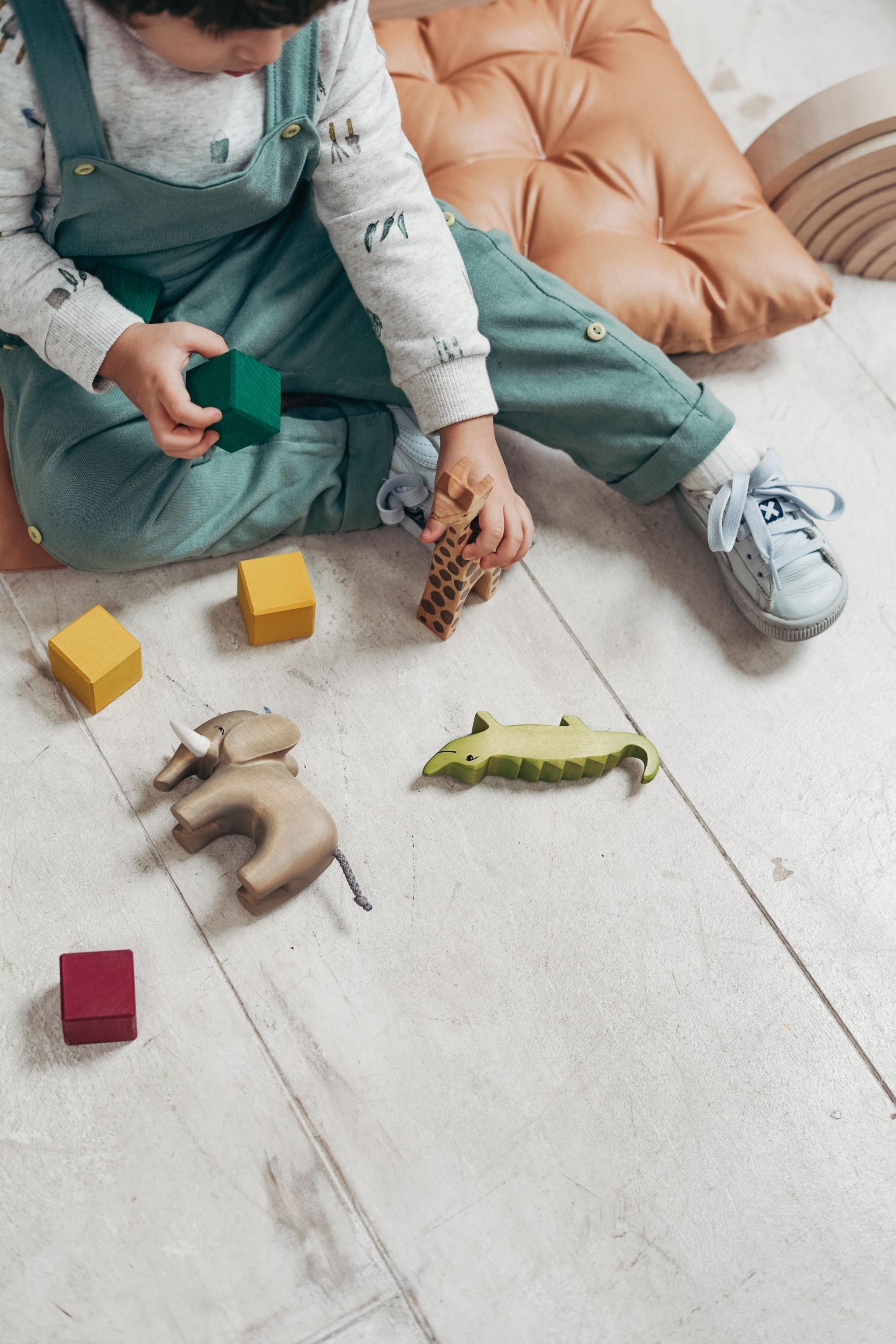
Your child leads. We follow. Child-led play therapy gives kids a way to show us what’s going on inside before they have the words for it. The sand tray, the figures, the art, that’s how we listen. Most kids stop dreading it within two visits and start asking when they get to come back.
Learn MoreDrawing, games, real conversation. No clipboard, no interrogation. We meet your teen where they are and build the trust that actually gets them to talk, not because they have to, but because they want to. Brainspotting is available for teens working through anxiety, trauma, or emotional overwhelm.
Learn MoreSessions with you every four weeks, without your child. You’ll always know what themes are emerging and what to try at home. For teens, we check with them first about what’s okay to share, so the trust stays intact. You’re on the team. Not in the waiting room.
Learn MoreFrom the Founder

For the family that’s tried everything and still feels stuck.
Maybe it was this morning. The socks were wrong, then the shirt was wrong, then breakfast ended up on the floor, and everyone left for school in tears. Again.
Or maybe it’s quieter than that: a teenager who answers in shrugs, takes the plate upstairs, and the table goes quiet in a way it didn’t used to. The school’s name flashes on your phone, and you brace before you even answer.
“Is something actually wrong?”
“Did I miss something?”
“We’ve run out of patience, and we don’t know what to do.”
“We need help.”
The thoughts you don’t say out loud. Every parent who calls us has a version of them.
You’ve read the articles. Tried the strategies. Had the calm conversation, and then lost it, and apologized for that too.
And everyone around you has an answer.
He’ll grow out of it.
She’s just testing you.
You’re too soft.
You’re too hard.
None of it works on a Tuesday at 6pm.
I see you. When everyone is running at full speed, the patient, present connection, the kind that actually reaches your kid, gets squeezed out.
And it’s exactly when a trained person who can slow down with your child, hear what they’re actually saying, and help you find your way back to each other, can change everything.
Our job isn’t to fix your child. Children aren’t broken. Our job is to understand what they’re trying to tell you, and to help you hear it.
Hannah Ly, LMFT
Founder and Clinical Director, Your Therapy Nook

Before she was a therapist, Hannah was a nanny for busy Silicon Valley families. She watched kids fall apart in ways the adults around them couldn’t decode, and watched parents who were genuinely trying still miss what was underneath. That stayed with her.
She has worked with children since 2012, and she built this practice to be the kind of place she kept wishing those families had.
Your Therapy Nook is a group practice, and every therapist here practices from the same belief system:
The therapist is the most valuable toy in the playroom. The relationship is the intervention.
Hannah sees families herself and works alongside therapists she hires, trains, and clinically directs. Whoever your family sees here was taught this approach by Hannah and is held to her standard, so the care doesn’t change with the calendar.
On the free 15-minute call, we match your family with the therapist on our team we think fits best, often one of the therapists Hannah trains and supervises, based on your child’s age, what’s going on, and what you’re hoping for.
Information was never your problem. The pattern lives in your child’s nervous system, and someone has to work with the child directly.
Busy can quiet a kid for a while. It doesn’t settle them.
Waiting is not neutral. Your child is still in it every day, and the way they get through it, shutting down, blowing up, holding it together until they can’t, gets more automatic the longer it runs. Earlier is easier, for them and for you.
Plenty of practices list children, teens, adults, couples, and grief on the same page, and from a profile you can't tell who really works with kids. Parents tell us how that went last time: a therapist who seemed more at home with adults, and a kid who dreaded going. Kids and teens are the whole practice here, and every therapist trained under Hannah in child and teen therapy specifically.
We’re not against it, and we’ll refer when it’s worth exploring. It can turn the intensity down. It doesn’t build the capacity.
Consequences can change what a child does for a week or two. They don’t reach why it keeps happening, so it comes back. We start with what the behavior is telling you, then work out with you what to try at home.

WHAT MAKES GOOD THERAPY POSSIBLE
A few months in, parents start noticing things. Small things at first, then bigger ones:
The meltdowns get shorter. And farther apart.
Morning routines stop being a battle every single day.
School stops calling.
Your teen starts coming out of their room.
The eye contact comes back. Conversations don’t end in a slammed door.
You stop walking on eggshells and start having real moments together.
You remember why you love being this kid’s parent.
You don’t need to be judged. You need to be supported. That’s what we’re here for.
Book a Free 15-Minute ConsultationWHAT WE HELP WITH
Every family is different. Every child communicates differently. Here’s the terrain we know intimately, the concerns we work with every week, in every case.
Bedtime fears, school avoidance, the worry that follows your child everywhere. Anxiety is the number one reason families come to us, and play therapy gives kids a way to process what’s driving it without forcing them to sit and talk about it.
Something happened, and your child has been different since. We work at their pace, using play, art, sand tray, and Brainspotting to help them integrate what they’ve been carrying, without forcing verbal recounting.
The chapter after placement gets the least support. This is personal to us. Every child carries attachment wounds, and families who’ve been through foster care and adoption carry something most therapists aren’t trained to hold.
Tantrums, meltdowns, aggression, school calls, these are communication, not character flaws. We work to understand what they're saying.
Separated parents, blended families, kids caught between two homes. We give children a space to process family change with someone who isn’t part of the conflict, and help parents on both sides support their child through it.
A genuinely warm, affirming space. Your teen can be fully themselves here, no explaining, no defending.
The light’s gone out of things they used to love. Depression in kids and teens doesn’t always look like sadness. Sometimes it looks like irritability, boredom, or a slow pulling away. We help them find their way back.
The grades are fine and your kid is not. Sunday-night stomachaches, an A-minus that wrecks the whole evening, a calendar without a single empty afternoon. Around here, the pressure starts young. We help kids learn to put it down.

OUR APPROACH
Because play is your child’s first language.
When you drop your child off for play therapy and pick them up an hour later, it might look like they just played. That’s the point.
Play is how children process what’s happening inside them, long before they have words for it. The sand tray, the figures, the art supplies, the dollhouse: these aren’t distractions. They’re the language. And a trained play therapist knows how to listen.
Most Bay Area kids move from school to activities to homework to screens. Play therapy is often the only time in a child’s week that is entirely their own, unstructured, unhurried, and held by someone trained to hear what they’re saying.
If your child has done therapy before and it mostly came home as worksheets, this is a different kind of room.

A four-year-old walks in and goes straight for the sand tray. Same as last week. He buries a small dog under the sand, digs it back out, buries it again. He doesn't explain it. We don't ask him to.
The room full of figures, art, games, books, and that sand tray isn't decoration. It's play therapy. What looks like play is a child saying something they don't have words for yet. Our job is to track it, stay with it, and understand it.
Blocks stacked and knocked down and stacked again. Then one week the dog stays out of the sand, and he hands it to us to hold. We didn't steer him there. We just didn't miss it when it came.
Every four weeks, without your child in the room, we tell you what we're seeing. What the play is pointing at, and one specific thing to try at home.
Connection before correction. The goal isn't a well-behaved child. It's a child who feels safe, seen, and connected, and a parent who feels confident in that relationship. For teens, and for kids carrying trauma or anxiety that talk alone hasn't reached, we also use Brainspotting, a gentle brain-body approach.
Calling a therapist for your child is not a small thing. Here’s exactly what happens.
Ready when you are.
Book a Free 15-Minute ConsultationYou tell us what’s happening. We ask a few questions. We’ll honestly tell you if we’re the right fit, and if we’re not, we’ll point you toward someone who is.
Before your child walks into the therapy room, we meet with you first. We hear the full picture, history, what’s happening, what you’ve tried, what your family looks like, what you’re hoping for. You are the expert on your child. We start there.
Children (ages 3 to 10) come for child-led play therapy. Teens (ages 11 to 17) draw, play games, talk, and use Brainspotting when it fits. Either way: 50 minutes of a trained child therapist’s undivided attention, from someone who gets curious about the person first, not the problem.
Every four weeks, without your child. We share what themes are emerging, ask how things are going at home, and talk about what to try. For teens, we check with them first about what’s okay to share. You walk away knowing what’s happening and what to do about it.
Not a formal step, just what happens over time. Not perfect. Calmer. More connected. Joy again.
Same-day and next-day calls are available. If you don’t see a time that works, email hello@yourtherapynook.com and we’ll make one work.
Yes. Sabrina Yglesias, our bilingual child and teen therapist, provides child therapy, teen therapy, and parent coaching fully in Spanish or English at our San Jose office. Ask for her by name on your free 15-minute call.
Yes. Bailey Verhulst, ASW, is trained in AutPlay, play therapy adapted for autistic and neurodivergent children, and she sees kids at both our San Jose and Redwood City offices. We don’t do autism testing or diagnosis, so if you need an evaluation we’ll point you to a child psychologist. Therapy can start with or without a diagnosis. Ask for Bailey on your free 15-minute call.
Both offices are designed so your whole family feels welcome the moment you walk in, not just the child on the intake form. The waiting room has siblings in mind. The therapy room has pillow fort vibes. And the parent who walks in carrying everything gets to, for a moment, take a breath. Spanish-speaking families: our bilingual child and teen therapist sees children and teens in Spanish or English at the San Jose office.
SOUTH BAY
2901 Moorpark Ave, Suite 270
San Jose, CA 95128
Serves: San Jose, Santa Clara, Sunnyvale, Cupertino, Campbell, Saratoga, Los Gatos, Milpitas, Fremont, Mountain View, Los Altos
PENINSULA
611 Veterans Blvd, Suite 210
Redwood City, CA 94063
Serves: Palo Alto, Menlo Park, Atherton, San Mateo, Belmont, San Carlos, Woodside, Portola Valley, Hillsborough, Mountain View, Los Altos

Is back to school anxiety normal? A San Jose child therapist on what it looks like, how long it should last, 6 things to do this week, and when to get help.

Still crying at school drop-off? A San Jose child therapist gives 7 steps for the car door, what is normal by age, and when it is separation anxiety.

A free printable letter your child fills out for their new teacher, from a San Jose child therapist. What it asks, why it works, and how to do it together.
Practical, emotionally grounded guidance from Hannah’s clinical lens. No spam. Easy unsubscribe.
What You'll Get: