For teens ages 11 to 17, and the parents who can tell something is off and can't get a straight answer about what.
Book a Free 15-Minute Consultation11 to 17
San Jose and Redwood City
Weekly, 50 minutes
Every four weeks, every case
Free, 15 minutes
For parents of teenagers

The door’s been closed for a while now.
Maybe it really is just the room and the screen and the “leave me alone.” Or maybe you can feel the difference.
What you’re seeing
One-word answers to everything. The AirPods are in before they’re even out of the car.
Texts left on read. The kid who told you everything from the back seat now tells everyone except you.
Grades sliding. The friend group gone in a weekend. The team quit out of nowhere.
Something they said, half a joke, that you can’t stop hearing.
What you’d only admit at 1am
You’ve been up at 1am replaying the last real conversation you had, trying to work out how worried you’re allowed to be.
The sting of being shut out by the person you know best.
The rewind through the last year, looking for the moment you missed.
The envy, small and human, when a friend mentions their kid still talks to them.
You’ve tried asking, and you’ve tried not asking. The door stayed shut either way.
People will tell you it’s a phase. Maybe.
But a teenager who has gone quiet, angry, or flat is telling you something, even when “telling you” looks like silence. If it’s keeping you up at night, it’s worth doing something about.
Your teen isn't shutting you out to hurt you. But there's a version of pulling away that's healthy, and a version that isn't, and from the hallway they look identical.
It's how teenagers become themselves. They're working out where they end and you begin, and some distance is the normal version of that.
A mood that has dropped and stayed down. Lost interest in what they used to love. Isolation from friends, not just from you. Anything they've said about not wanting to be here.
On the surface both look like the same closed door. Therapy is for the second one: one place where they don't have to perform okay, explain themselves, or protect anyone's feelings.
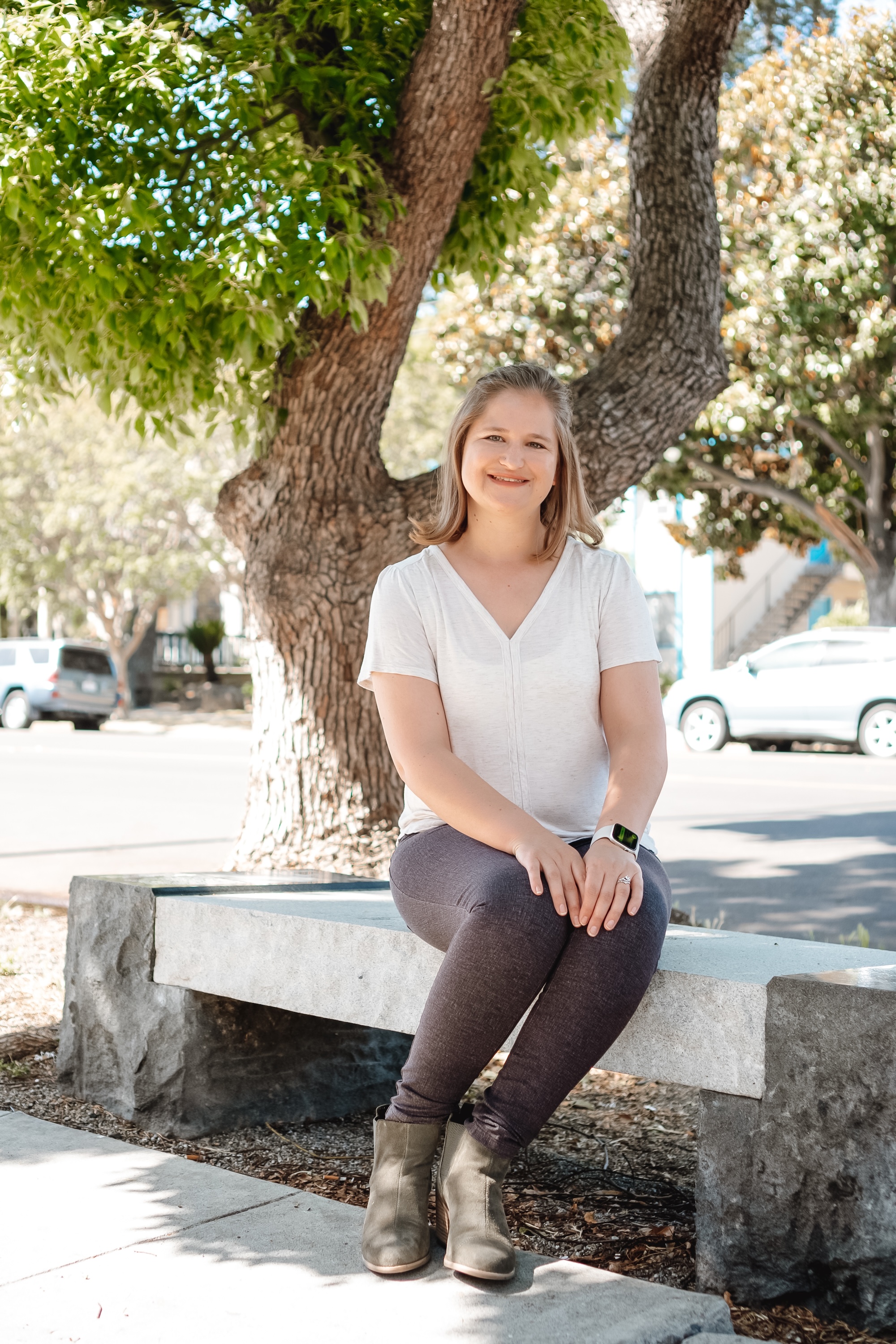
I'm Hannah Ly, LMFT, and as clinical director here I've kept one rule for teen therapy. I work with teens without a clipboard or a list of questions, because no teenager opens up to an adult sitting across a desk waiting for them to share their feelings. We draw, play a game, talk about what they're actually into. Teens say more with their hands busy and the pressure off.
When there's anxiety, trauma, or a heaviness talking can't reach, I use Brainspotting. And I'm there to understand your teen, not correct them. Most teens can tell the difference in the first session.
I'm not the only teen therapist here anymore. The other therapists on our team trained with me and bring their cases to me every week, so your teen gets the same no-clipboard approach whoever they see. The consultation call is with me, and you're welcome to ask for someone specific.

Inside the room
Relaxed and activity-based, and nothing like what your teen is bracing for. No clipboard, no scripted questions, no lecture.
Drawing, a game, whatever they're actually into. Side by side opens teens up far more than sitting across from an adult.
Teens who swear they won't usually do, once nobody is sitting there waiting for it.
When anxiety or trauma sits somewhere words can't reach, we work through the nervous system instead of asking them to narrate it.
We get to know each other first. The hard stuff comes when they're ready for it, not on a timeline.
I'm there to understand your teen. Most teens can tell the difference within the first session.
Every four weeks, with your teen's input on what gets shared, so what happens in sessions doesn't stop at the door.

You tell us what's going on. We tell you honestly whether this is a fit, how we'd work with your teen, and which therapist on our team we think fits your teen best, usually one of our other therapists, each trained and supervised by Hannah. Some teens click faster with one therapist than another, and we'll say so. No pressure.
We start with you. You know your teen better than anyone, and we need the history, the worries, and what you're hoping changes, before your teen ever walks in.
Parents often come in briefly at the start to set goals together. After that, the room is your teen's. We get to know each other first. The hard stuff comes when they're ready, not on a schedule.
Your teen comes weekly. Every four weeks your teen's therapist meets with you, without your teen, and with their input on what's shared, so you know what's happening and what to do with it at home. It's on the calendar every four weeks, hard month or easy month, because the easy months are where we get at what's underneath.
Not a switch that flips. Over time: the fights end differently. They come out of their room. They tell you something small, unprompted, and it feels like a window cracking open.
I won't tell you it's a straight line, because it isn't. There are good weeks, hard weeks, and weeks where nothing seems to move. But over time, parents tell us things like this.





Your teen doesn't need to be fixed. They need somewhere to set down what they've been carrying, with someone whose only job is to understand it. When they have that, they stop having to dump it everywhere else, including at home.
The worry that won't switch off. The kid grinding every assignment to death because anything less than perfect feels like failing. The stomachache before school, the panic before a test, the meltdown over something that "shouldn't" be a big deal. We work with what's driving it, not just the surface.
The teen who quit the team, dropped the friends, stopped caring about a future they used to have opinions about. Sometimes it looks like sadness. More often it looks like flatness, irritability, or a kid going through the motions on empty.
The blowups that don't match what set them off. The constant friction. Anger is usually the part of the iceberg you can see. There's almost always something underneath it that hasn't had anywhere to go.
Adolescence is when the "who am I" question gets loud. For some teens that includes questions about gender or sexuality. This is an affirming space. Your teen doesn't have to explain or defend who they are here.
Something happened, and your teen has been different since. We work at their pace. When the weight sits somewhere words can't reach, Brainspotting helps.
Still turning things in, still saying "I'm fine," and running on empty underneath it. When the workload has become the whole personality, we work on what happens if they are ever anything less than exceptional.
If you've heard something that scares you
If your teen has said anything about not wanting to be here, or about hurting themselves: call or text 988, the Suicide and Crisis Lifeline, or go to your nearest emergency room. Don't wait to see if they meant it. If you need help figuring out what comes next for your teen's care, we can have that conversation too.

A lot of the teens I see in San Jose and Redwood City aren't visibly falling apart. They're still showing up, still turning things in, still saying "I'm fine." But there's an exhaustion underneath it. The sense that nothing they do is ever quite enough, in a place where the college talk started before they could read.
That's a real kind of suffering, even when the grades are still there. Seeing it, and getting your teen support before it gets heavier, is the right call.
Talking isn't required, and teen therapy is built around that. We work with teens while they're drawing, playing a game, or doing something they're into, because side-by-side activity opens kids up far more than sitting across from an adult waiting for them to share. Teens who swear they won't talk usually do, once the pressure is off.
This is one of the most common things parents of teens tell us. The parent intake session, before your teen's first appointment, lets us plan the approach together. Most resistant teens find the room is nothing like what they were dreading, because their teen therapist isn't there to lecture them, report back to you, or hand out homework. That tends to surprise them.
Before every parent session, we ask your teen what's okay to share, and they get real input over it. Confidentiality has legal limits, and if your teen is in danger, safety comes first. Within those limits, what your teen brings into session stays there. A teen who doesn't feel surveilled will open up. A teen who does, won't. Protecting that trust is what makes the therapy work.
Some pulling away is a normal part of growing up. It's worth a closer look when the withdrawal comes with a lasting drop in mood, loss of interest in things they used to care about, isolation from friends and not just family, a clear change from their baseline, or anything they've said about self-harm. You don't have to diagnose it yourself. A 15-minute call will tell you whether this is the normal stuff or worth addressing now.
Teen therapy at Your Therapy Nook is for ages 11 to 17. Younger children, ages 3 to 10, are served through our child therapy and play therapy program.
A teen session is relaxed and activity-based: drawing, a game, or just talking through what's going on, with no clipboard and no scripted questions. When anxiety or trauma sits somewhere talking can't reach, Hannah uses Brainspotting, which works through the nervous system rather than requiring your teen to narrate it. Every teen's care also includes parent coaching every four weeks for you.
No. Your Therapy Nook is private pay only. Sessions run $200 to $270, depending on the therapist, and a parent session every four weeks is billed at the same rate. We don't bill insurance, but we provide superbills you can submit for out-of-network reimbursement.
Child and teen therapy is in-person only, at our San Jose and Redwood City offices. So much of teen therapy depends on being in the same room: what they do with their hands, what their body says when words don't. The San Jose office serves families from Willow Glen, Campbell, Cupertino, Saratoga, Los Gatos, Milpitas, and Fremont, and the Redwood City office serves Palo Alto, Menlo Park, Atherton, San Carlos, and San Mateo. Parent coaching sessions can be done by video.
Yes. Sabrina Yglesias, our bilingual teen therapist, sees teens in Spanish or English at our San Jose office, and parent coaching sessions are available in Spanish too. Some teens want to talk in English while their parents are more comfortable in Spanish, and that works fine. Ask for her by name on your free 15-minute call.
It depends on your teen and what's underneath what brought you in. Some families notice real shifts within a few months. Others work with us longer. We'll be honest with you throughout about what we're seeing and where things are going.
Signs of a struggling child that are easy to miss, why advice and discipline often fall short, and when it makes sense to see a child therapist.
How to talk with your child about mental health at any age: opening the conversation, answering questions honestly, and when to bring in more support.
A San Jose child therapist walks through building a family safety plan for when behavior turns unsafe: triggers, prevention, and what comes after a crisis.

Tell me what's going on, and I'll tell you honestly whether we're the right fit for your teen.