How children ages 3 to 10 make sense of hard things through play therapy, in their own language.
Book a Free 15-Minute Consultation3 to 10
San Jose and Redwood City
Weekly, 50 minutes
Every four weeks, every case
Free, 15 minutes

Most parents who find this page are not doing research. The school called. Or your child fell apart in a way that scared you. Or something that had been building for months crossed a line this week.
"She's hitting at preschool. She got sent home today."
"Something tiny goes wrong and the whole afternoon is gone."
"Once the bucket tips over, there's no reasoning with her."
"We've run out of ideas."
If any of those could be your sentence, you're in the right place.
The advice you've already heard
He just needs discipline.
She'll grow out of it.
Have you tried a sticker chart?
You've tried the chart. The chart is not the problem.
What's underneath
On the surface, it looks like a behavior problem. Underneath, your child is communicating something they don't have words for yet. Play therapy is how we listen.
What play therapy is
Play therapy is how children work through what they can't yet say in words.
You're not overreacting. If it's big enough to worry you, it's big enough to bring here.
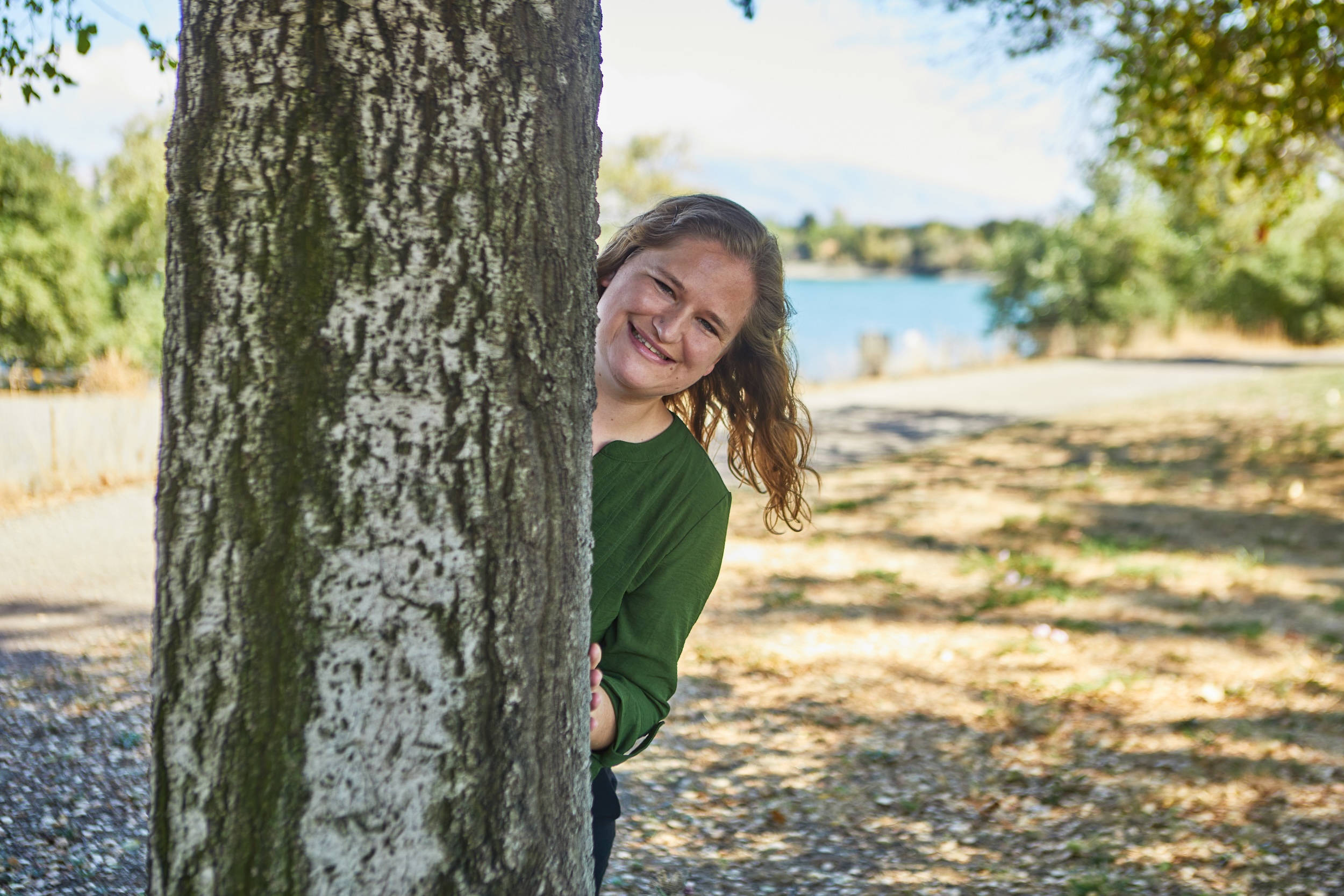
I'm Hannah Ly, LMFT, and play therapy is the heart of what I do. I built this practice around it. A child walks in, goes straight for the same two figures they picked last week, builds the same scene, and says nothing about it. Working out what that means has never stopped being interesting to me. More than a decade in, and I still leave sessions thinking about it.
The other therapists here learned play therapy the way I practice it, and I review their cases with them every week, so the room works the same way whichever of us your child sees. I do every consultation call myself, and you can ask for a specific therapist when we talk.




Children can't always say what's wrong. The parts of the brain that put feelings into language are still catching up. Play is the language already there.
Our approach is child-led: the child directs what happens in the room. We don't steer the play toward a theme or suggest what's next. We follow.
Every choice a child makes, what they pick up, what they build, what they knock down, what story they act out, is information.
Our therapists track it in real time, reflect it back, and help the child connect with what they're feeling.

At the end of your child's first session, you'll ask what they did. The answer will be something like: "We played Uno." Or "I built with blocks." Or just, "We played."
Fair question. Here's what was actually happening.
Shelves of toys, people figures, animal figures, puppets, art supplies, games, books, and a sand tray, all within reach. (The sand tray is the most popular thing in the room. It's not close.) No clipboard, no agenda.
My job is to stay with what they show me, reflect it back, and respond as if what's happening in the room is happening for real, because for your child, it is.
Some weeks look like a warm-up for the real therapy. It is the real therapy. The processing doesn't announce itself week to week.
It's mostly about age.
Children this age are still building the abstract reasoning and emotional vocabulary that talk-based therapy depends on. Play is already how they communicate, so we meet them where they are instead of asking them to work in a language they don't have yet.
CBT works by helping someone catch a thought, look at it, and choose a different one. That takes abstract reasoning, which arrives later than most of us assume, around eight at the earliest. That's why our teen therapy involves real conversation and not a sand tray, and it's not an argument against CBT.
What we see most often is the family who already did a round of CBT. The child can recite the coping skill and point to the number on the feelings chart. Then Tuesday morning happens and none of it is available.
Knowing a skill and reaching for it while flooded are two different things. That gap is where play therapy lives.
Getting ready for school becomes a meltdown. The stomachaches, the bedtime fears, the food that stopped being safe. Fifty minutes where nobody asks them to explain themselves is a relief.
The hitting, the meltdowns, the sent-home-again. The school sees the behavior. You see your child. The behavior is the message, and we work out what it's saying.
Kids replay hard things in play, at a safe distance, the crash rebuilt with cars, the scary thing happening to the puppet. Processed without forced retelling, at their pace.
Two houses, a new sibling, a move. One consistent hour a week, same room, same therapist, does more than most parents expect. Predictability matters.
Attachment wounds surface in behavior years later. Play therapy gives the child a relational experience their early life didn't: attentive, consistent, without conditions.
The tower falls, gets rebuilt, and the kid discovers they're still okay. Mistake tolerance is built through experience, not explanation.
What we notice in your child's play each week.
One specific thing to try before the next session.
Coaching every four weeks for you, without your child there.
Your child's weekly sessions are one-on-one with the therapist. Every family also gets parent coaching every four weeks, without your child, where we share what we've been noticing in the play, less a clinical report than a real conversation about what your kid is working through, and one specific thing to try at home.
It's not a parenting program, and it's not a report card. Most parents who find their way here are already trying really hard.
The shift from "what is wrong with my kid" to "what does my kid need" is usually where things start to open back up.
More about parent coachingProgress in play therapy isn't linear, and we won't tell you otherwise. Some weeks feel like three steps forward. Some weeks it's hard to name anything that changed. That's not a sign nothing is happening. The internal stuff doesn't announce itself week to week.
We can't promise a timeline, every child is different. We review it with you every four weeks, and if it's not moving, we say so.

We'll ask a few questions, answer yours, and match your family with the therapist we think fits your child best, usually one of our other therapists, each trained and supervised by Hannah.
Book a Free 15-Minute ConsultationYour child's history, what's been happening, what you're hoping for. You first, always.
50 minutes, your child leads, San Jose or Redwood City.
What we're seeing, and what to try at home.
Your Therapy Nook serves families across the South Bay and Peninsula from two convenient in-person locations.
SOUTH BAY
2901 Moorpark Ave, Suite 270
San Jose, CA 95128
Serves: San Jose, Willow Glen, Santa Clara, Sunnyvale, Campbell, Los Gatos, Saratoga, Cupertino, Milpitas, Fremont, Mountain View, Los Altos
PENINSULA
611 Veterans Blvd, Suite 210
Redwood City, CA 94063
Serves: Redwood City, Palo Alto, Menlo Park, Atherton, Woodside, Portola Valley, San Carlos, Belmont, San Mateo, Foster City, Hillsborough, Mountain View, Los Altos
Play therapy is a research-supported form of child therapy that uses play as the primary medium for communication and healing. Rather than asking children to talk about their feelings, play therapists observe and respond to what children express through toys, art, sand trays, games, and creative play. It is most commonly used with children ages 3 to 10, when play is still a child's dominant mode of communication.
The child is given a room with carefully chosen materials and allowed to lead the play. The therapist tracks what the child communicates through their choices and responds in real time. Over time, children process difficult experiences through play in ways they can't yet access through language. Sessions are 50 minutes, weekly, and at Your Therapy Nook every family also receives parent coaching every four weeks.
Yes. Play therapy is effective for anxiety in children, including separation anxiety, school-related anxiety, social anxiety, and generalized worry. Anxious children often cannot name what they are afraid of, so play lets them get close to it at their own pace. The Association for Play Therapy tracks published outcome research supporting its effectiveness.
Play therapy is most effective for ages 3 to 10, when play is a child's primary mode of communication. For older kids and teens, the approach shifts toward games, conversation, art, and Brainspotting.
It can be, when the room adapts to the child. Bailey Verhulst, ASW, is trained in AutPlay, a form of play therapy built for autistic and neurodivergent children that changes to fit the child's brain rather than asking the child to change. If sticker charts and social stories keep not landing, that usually means the approach was built for a different kid. We don't do autism testing or diagnosis; therapy can start with or without one.
It depends on the child and what they are working through. For children with mild adjustment concerns, meaningful progress often happens within 3 to 6 months of weekly sessions. For children working through significant trauma or long-standing patterns, it takes longer. We check in regularly about whether the approach is working.
We tell children directly that this is a place where they come to play, and that we're here to help kids with big feelings or hard situations. We don't hide that it's therapy. Most children experience sessions as something that's theirs, a place where they're in charge. Most of them like it.
It is common for a child to hold back in the first few sessions. Some children take their time before they are willing to engage with the room, and that is expected. A child who resists is still communicating something important about how they approach new relationships. We don't push engagement. We follow it.
It depends mostly on age. CBT asks a child to notice a thought, evaluate it, and replace it, which takes abstract reasoning most children do not have before about age eight. For roughly ages 3 to 10, play therapy matches how children already communicate; for older kids and teens, CBT and talk-based approaches can be a strong fit. Play therapy has its own substantial research base, including a meta-analysis of 93 controlled studies that found a large overall effect.
A child can learn a coping skill, name it correctly, and still be unable to reach for it in the moment, because knowing a strategy and accessing it while overwhelmed are two different things. Play therapy works on what is underneath rather than on the skill list. The child gets the experience of being understood while the difficult feeling is present, which is what makes regulation possible later.
Two in-person locations: San Jose at 2901 Moorpark Ave, Suite 270, serving the South Bay, and Redwood City at 611 Veterans Blvd, Suite 210, serving the Peninsula, including Palo Alto and Menlo Park. Mountain View and Los Altos families are about equally close to both.
Sessions run $200 to $300 depending on the therapist; current rates are on our rates page. Private pay, with superbills provided for out-of-network reimbursement. Every family's care includes parent coaching every four weeks.
Yes. Weekly sessions are one-on-one with the therapist, and every family gets parent coaching every four weeks, where the therapist shares the themes emerging in the child's play and works with parents on what to try at home. Parent involvement is core to the model, not an add-on.
A play therapist explains why sessions look like ordinary play, what is actually happening in the room, and what change tends to look like over time.
What play therapy is, what it is not, and why children ages 3 to 10 work things out through play. For parents weighing whether it fits their child.
A San Jose child therapist reviews Pixar's Hoppers: the themes that stood out, which kids it suits, and what she is taking back into the therapy room.