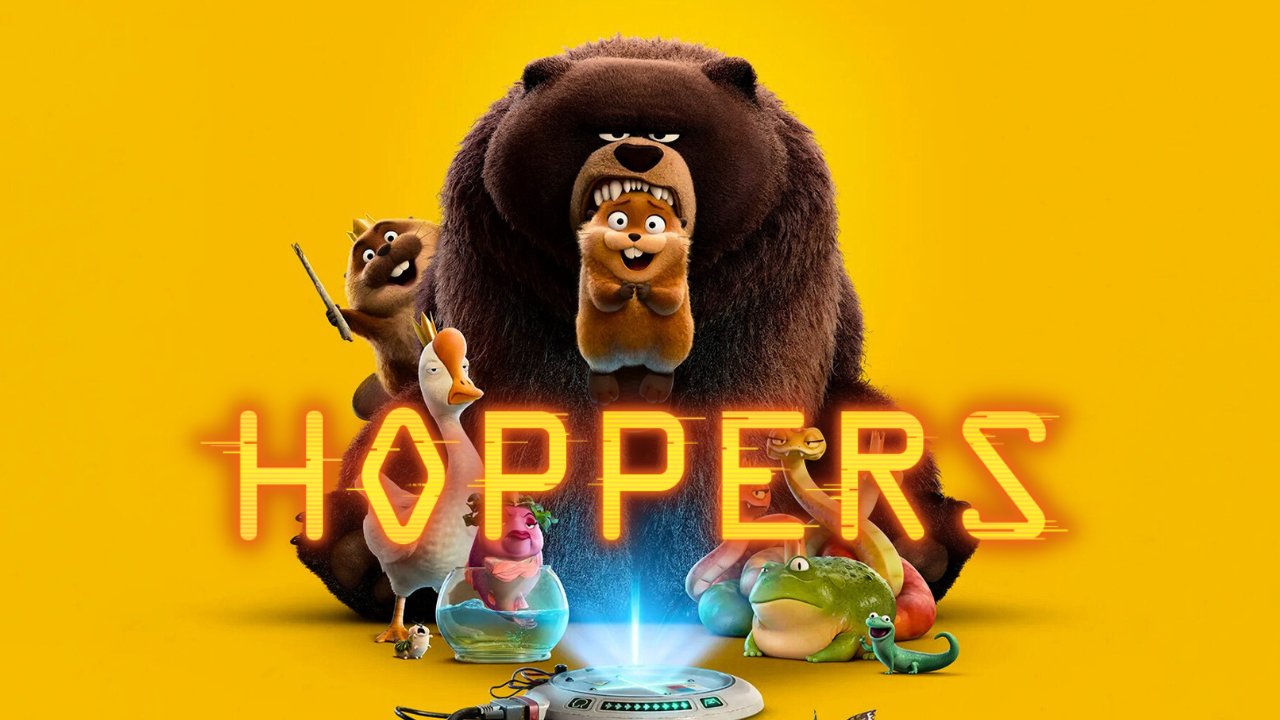
I am a big fan of Pixar movies so when my brother invited me to see Hoppers in theatres, I agreed without missing a beat. It did not disappoint!
After seeing Elio from the comfort of my couch, I had a hunch that Pixar was coming into their Authentic Childhood Era. Hoppers reinforces my hunch.
I'm Hannah Ly, a child therapist and play therapist in San Jose, CA and the founder of Your Therapy Nook, a child and teen therapy practice in San Jose.
Hoppers is the latest film from Pixar, and from my child therapist lens, it might be their most emotionally honest one yet. In this post I'm sharing my review, the themes that stood out to me, and what I'm already bringing back into the therapy room.
Meet Mabel
Hoppers opens with a young girl, Mabel, trying to help some folks in distress. Unfortunately, the adults at school get in the way and she ends up sent home from school to stay with Grandma. This ends up being her origin story, if you will, that drives Mabel for the whole film.
The film shows how Mabel persists to do what she believes is right while also being able to take a pause to learn from others around her.
Her Grandma, which the film flashes back to throughout, is a strong positive caregiver in her life. What I appreciated about the Grandma in Hoppers is that she leads with vulnerability and empathy when helping Mabel.
While the adults at school and even her mother tell her what she is doing wrong, it’s her Grandma who shows her how to connect with herself, and the world around her, to do what is right.
Themes and Lessons
On the surface, Hoppers is about conservation and perspective taking, which for a children’s film, is already quite complex. On a deeper level it’s also about family legacy, human emotion, and being a part of something bigger than yourself.
Mabel connects with the folks she is trying to help and in the process is able to honor her Grandma, understand herself, and people in her life she doesn’t agree with, more.
She has big feelings throughout the lifespan of the movie and while some patterns keep repeating, Mabel is able to grow and change.
Her Grandma teaches her that when she can connect with nature and feel herself in the bigger world, she can feel a little more calm and connected to herself.
The film also depicts the noise we experience every day being humans. For Mabel, she combats the negativity being yelled at her and her own beliefs about the people around her, which are later challenged and dispelled by trusting the truest parts of herself and the wisdom of others. She falters but ends up getting there by the end.

Who Hoppers Isn’t For
Hoppers has scary elements including a shark (“Diane, who is actually really nice”), a fire threatening to burn a city, reckless driving, and a car crash.
There are fatalities amongst the animals but none for humans in the film (although it is threatened). It had loud sounds and some unexpected or surprising moments throughout.
I would say it’s more emotionally intense than Inside Out 2 and less violent than The Incredibles. The villain has a walk that is similar to General Grievous from Star Wars and had a creepy vibe.
Who Hoppers Is For
Hoppers compassionately tells the story of a child who is misunderstood, and I would even add, from my child therapist lens, not seen by the majority of the adults in her life.
They miss opportunities to know the full story, hear her out, or to have the foresight to take a moment to give her a glitter jar to play with so she can take a deep breath. Everyone, except her Grandma (and when she is older, a professor).
Her Grandma is different, and that’s what draws Mabel in. Grandma connects with herself first and then offers Mabel access to the calm as well.
Mabel continues to connect to herself throughout the film and as she does, she is able to keep trusting herself, her friends, and even her opponents, to do the right thing.
If you have a child in your life (including your inner child) who has felt misunderstood and who isn’t afraid of sharks, Hoppers is for you.
What I’m Taking Back to the Therapy Room
I’m already looking forward to conversations with my clients about where their calm rocks are and who is there with them, how they can connect with themselves in moments of challenge, and that “everyone has rage problems, am I right?”
I found myself chuckling throughout the film at the witty and funny moments and enjoying the pure and raw silliness of it all. I was tearful throughout the movie when I wasn’t cracking up or feeling surprised by the uniqueness of the plot.
When the lights went up and the end credits started rolling, I found myself reflecting on my place in our big world, and feeling grateful to be able to experience human emotions about it.
Looking for a Child Therapist or Play Therapist in San Jose?
If your child has big feelings that feel hard to reach, or if you've been searching for someone who will truly see them, I'd love to connect.
As a child therapist and play therapist in San Jose, my whole practice is built around one thing: helping children feel understood so families can find their way back to each other. Your child doesn't need to be fixed. They need to be seen. And you deserve to feel like you're on the team.
Schedule your free 15-minute consultation below. No pressure, just a conversation to see if we're a good fit.

About the Author: Hannah Ly, Child Therapist in San Jose
Hannah Ly, LMFT is a child therapist and play therapist in San Jose, CA and the founder of Your Therapy Nook, a boutique therapy practice built exclusively for children, teens, and the parents who love them.
Hannah specializes in child-led play therapy, teen therapy, and Brainspotting, with deep roots in attachment and trauma work. Her approach is simple: behaviors are communication. When children are truly seen and understood, those behaviors become less necessary. Not because someone trained them out, but because the child doesn’t need them anymore.
Every family at Your Therapy Nook gets weekly child or teen sessions plus parent coaching every four weeks, because children don’t grow up in a vacuum. Hannah’s goal isn’t a well-behaved child. It’s a child who feels safe, seen, and connected, and a parent who feels the joy of their family again.
Free 15-minute call
If this sounds like your house, tell us what's going on. Hannah does every first call herself.
Book a Free 15-Minute Consultation